
Srinivasa Raghava: Patterns, Primes, and the Ramanujan Influence
SHARING AN INTERVIEW FROM INVARIANTMATH:
By Abdulhafeez Abdulsalam
Almost a decade ago, I found myself drawn to mathematics on Facebook. While many used the platform for casual updates, some of us were exchanging problems and ideas. It was there that I first encountered the work of Srinivasa Raghava.
Around eight years ago, I began seeing his posts regularly. They stood out immediately. Elegant integrals, unexpected closed forms, and Ramanujan-style expressions that invited experimentation. I started studying many of the problems he shared, and gradually found myself attempting them. Through this process, I was drawn deeper into special functions and experimental mathematics.
His original problems and strikingly unique results drew the interest of mathematicians such as world-renowned number theorist Ken Ono and George Andrews, the world's leading expert on the theory of integer partitions and a foremost authority on q-series and special functions. Both engaged with his ideas and expressed appreciation for the Ramanujan-style creativity behind his work
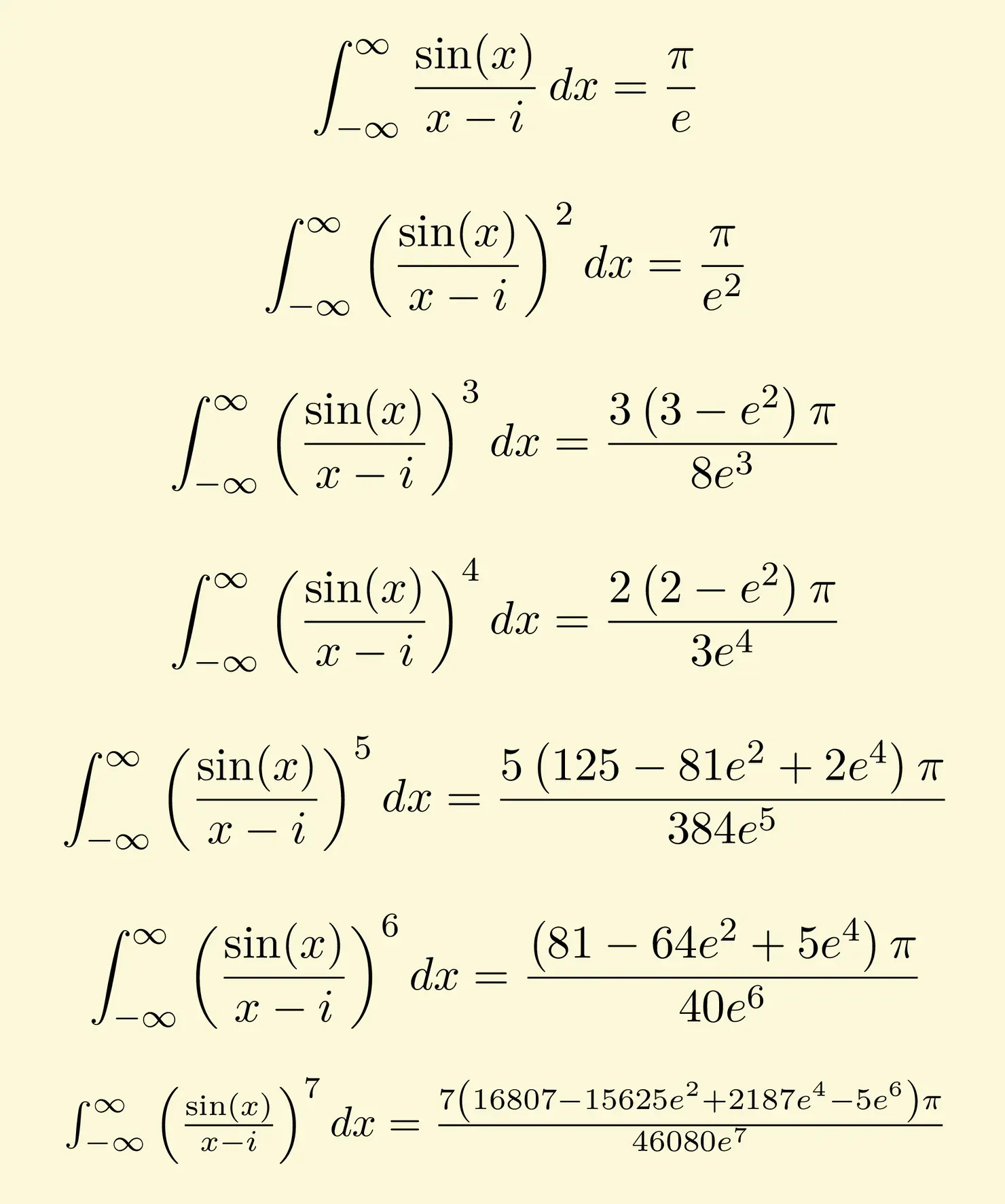
One example that caught my attention was the following family of integrals he proposed. The pattern was simple, yet the structure suggested something deeper.
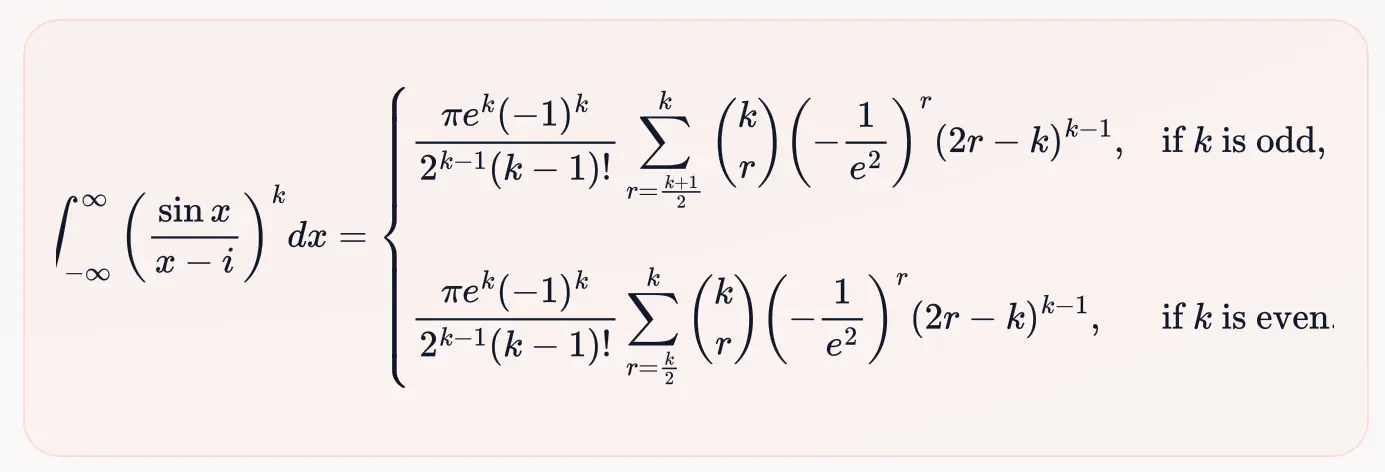
Seeing this, I was naturally led to search for a generalization, which produced the following form.
His posts were not limited to integrals. In the area of infinite series, he also shared elegant expressions that combined structure with surprise. For instance,

Isn't it quite remarkable how this expression sums to 2345? I was also able to prove this identity. Encounters like these made me increasingly curious about the ideas behind his discoveries.
Today, Srinivasa Raghava joins us to discuss intuition, experimentation, Ramanujan’s influence, and the creative process behind his mathematics.
1. Could you introduce yourself to friends of InvariantMath, and tell us how your journey into mathematics began?
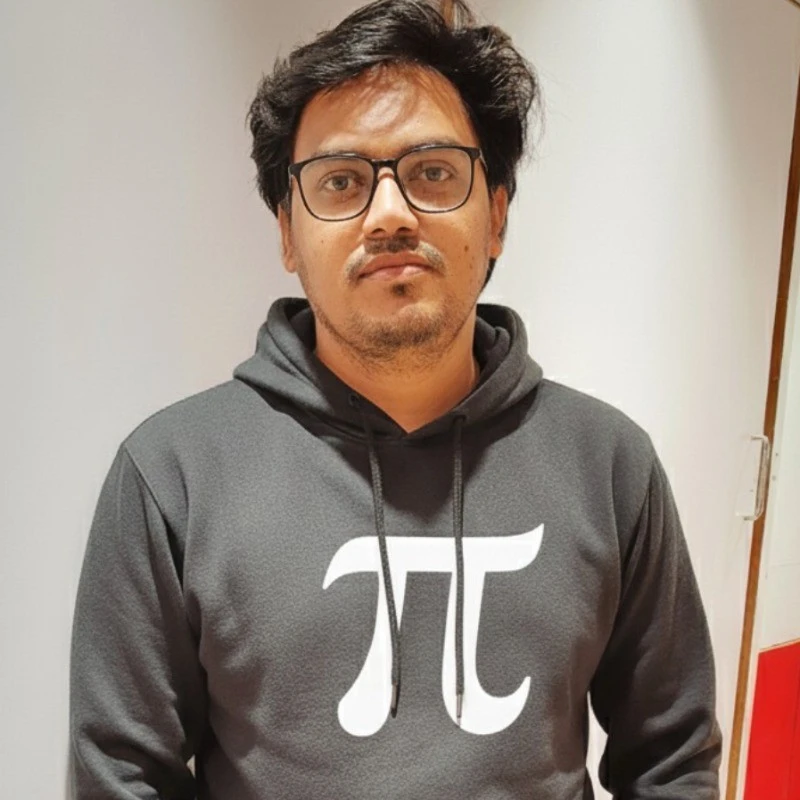
Hi, I'm Srinivasa Raghava from India. I'm a mathematics researcher and chess coach. I completed my master's and PhD in Chennai, India. My work is mostly inspired by the great mathematician Srinivasa Ramanujan. I am also interested in graph theory and cryptography. Currently, I am working on the Riemann Hypothesis.
2. Your work is often inspired by Srinivasa Ramanujan, with whom you even share a name. What aspects of his mathematical thinking influence you the most?
Mathematics has been my greatest passion since childhood. I have always been fascinated by the hidden properties of numbers and the surprising connections they reveal. Since both my parents are teachers, I naturally developed a clear way of explaining ideas to my friends.
When I was about eight years old, one of my teachers introduced me to Srinivasa Ramanujan. His story deeply inspired me, even though I could not understand his work at the time. I began solving challenging problems from magazines and won several awards.
As a teenager, I borrowed An Introduction to the Theory of Numbers by Hardy and Wright from the local library. There I first encountered integer partitions and the Rogers–Ramanujan identities. They opened a mysterious new world to me. Although I did not fully understand them, I tried to explore them in my own way.
That experience changed my life. I decided to pursue mathematical research, with the dream of discovering beautiful theorems like Ramanujan’s. Interestingly, we come from the same community, and “Srinivasa” is a very common name where I am from.
3. You received early recognition from George Andrews for your Ramanujan-inspired mathematical creativity. I was fortunate to receive similar encouragement recently. How did this shape your direction in mathematics?
After I discovered some interesting results, I showed them to my teachers and college professors. They appreciated my work, but said it was too complex and advised me to focus on my regular studies instead of research. I felt quite disappointed.
Then one of my teachers suggested that I send my findings to mathematicians abroad. I did not know any names, so I searched online and discovered two leading experts on Ramanujan, Prof. Bruce Berndt and Prof. George Andrews.
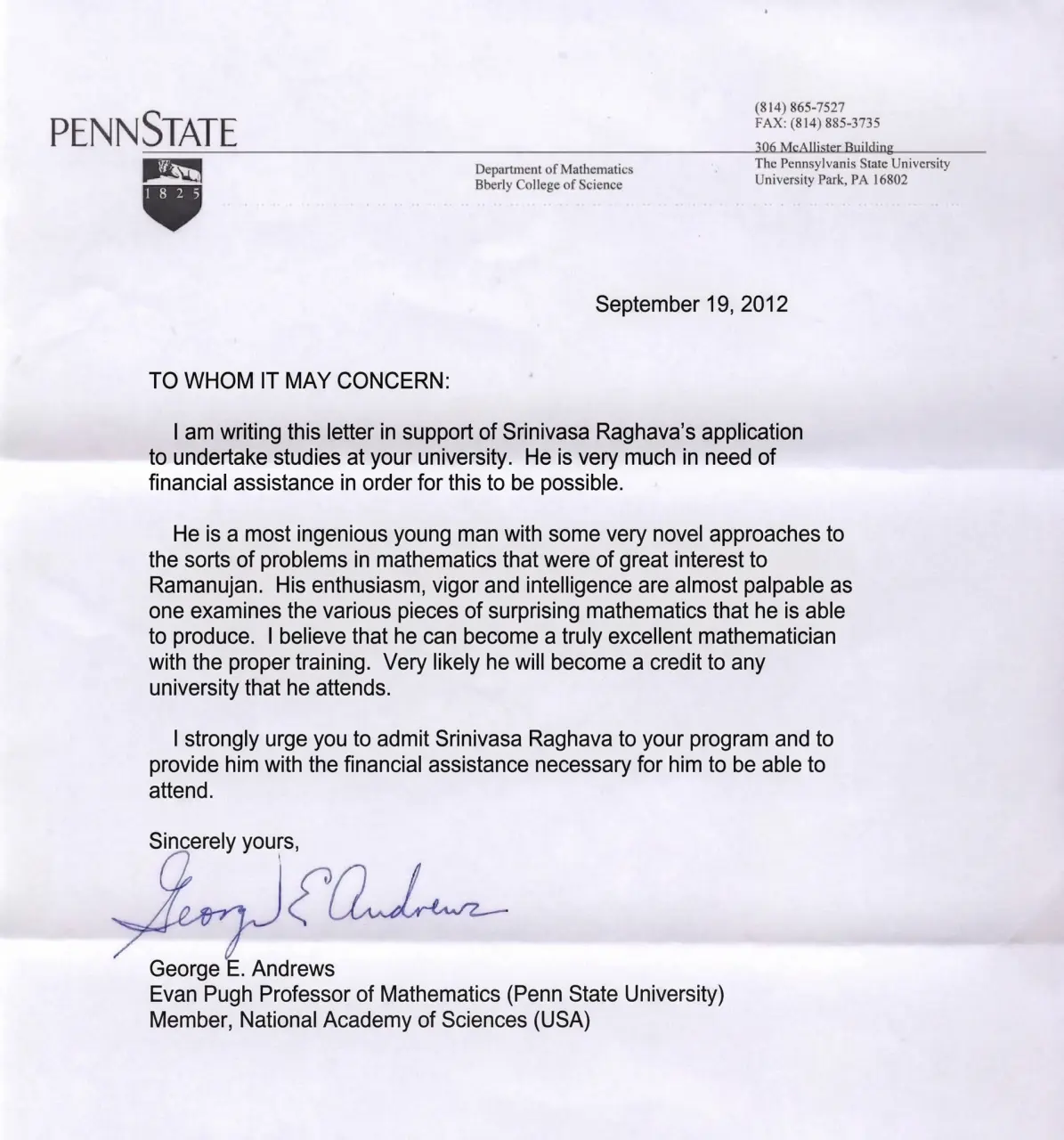
I carefully wrote my results, scanned them, and emailed copies. Both professors responded with wonderful appreciation and encouragement. They were very kind and supportive. Prof. George Andrews even wrote a letter in support of my mathematical work.
Prof. Bruce Berndt invited me to the Number Theory Fest at the University of Illinois in Chicago. I was still a teenager from a middle class family, and when I applied for a US visa, it was rejected four times. That was very disheartening.
Later, I met Prof. Krishna Alladi in Chennai. He was impressed by my work and invited me to an international Number Theory conference at the University of Florida in Gainesville. He also helped me with the visa process.
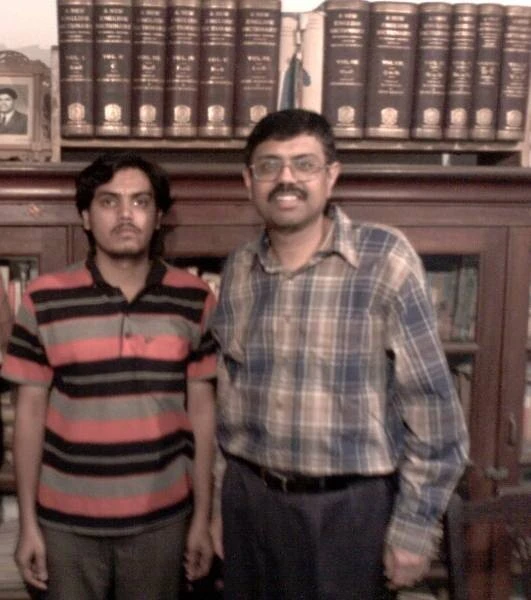
This time it worked, and I attended the conference. There, I met many legendary mathematicians like Prof. George Andrews, Prof. Bruce Berndt, Prof. Ken Ono, Prof. Frank Garvan, Prof. Tim Huber, and many others. For a young teenager, it felt like a dream come true.
Those meetings and the encouragement I received completely changed my perspective and set the direction for my life.
4. Your work often appears as a continuous stream of identities, integrals, partition formulas, and Ramanujan-style formulas, many presented visually. How do these ideas typically emerge: as isolated discoveries or as part of a larger underlying structure you gradually uncover?
After learning about Ramanujan, I naturally started working in a similar spirit, just as any excited young math lover would.
Once I got hold of advanced books on partitions, modular forms, and q series, I began working seriously and started discovering new formulas. My habit was to send only the formulas to experts first, without proofs. After they checked and confirmed the results, I would then send full solutions.
Many of these formulas came purely from experimentation. I would study number patterns, spot surprising connections, and guess the general rule.
The formulas I share on different platforms are often just simpler special cases taken from larger general theorems.
5. You recently wrote that the real threat of AI is not unemployment but the slow loss of independent thought. At a time when AI can assist with proof and pattern discovery, how should mathematicians use these tools without weakening originality and intuition?
I strongly believe that mathematics is a deeply human endeavor.
However, I am concerned that AI is slowly taking away our ability to think independently. I see many students using AI even for simple math or coding problems, or to complete their homework. This trend is not healthy for the future.
In my view, AI should be used as a powerful tool to strengthen and support mathematicians, not to replace human thinking.
I have been reading Prof. Terence Tao’s writings on this topic. He shows how AI can assist mathematicians with proofs, discovering new theorems, and solving difficult problems. Yes, one day AI might even crack great unsolved challenges like the Riemann Hypothesis.
But even then, it can never truly imagine and create the way geniuses like Ramanujan or Riemann did. That special spark of imagination and intuition belongs to the human mind. This creative power is what truly sets us apart from machines.
6. You frequently present striking identities built around specific numbers, often involving π, the golden ratio φ, Fibonacci sequences, or special series. How do these ideas arise? Do you start from the number itself or from structures that later reveal these relationships?
Yes, I have always loved finding short, clever shortcuts to the answer.
That is exactly why I often scored low in math exams. Teachers expected long, step by step solutions, but I would jump straight to the elegant final form.
My thinking works like this. I first imagine the beautiful form I want, a nice formula or expression, and then carefully build a problem around it so that the solution naturally becomes that exact form.
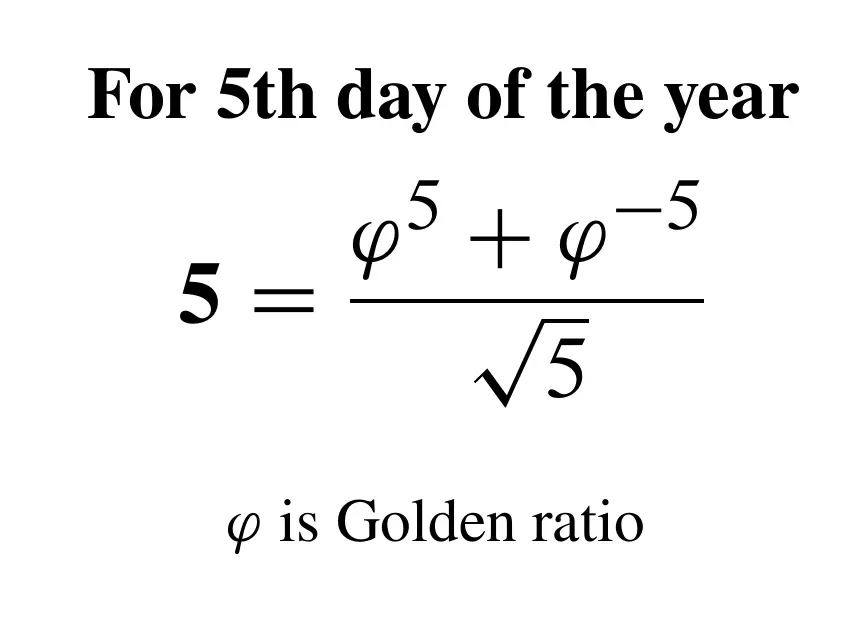
I developed this habit early and applied it to harder and harder problems, which gave me fruitful results.
For example, if I need a unique representation of a special constant, I construct a special matrix whose determinant equals that constant. This approach has become one of my most powerful tools in research.
7. I believe mathematics lives both as science and as art, and often sits close to neighbouring areas like physics and computation. You list interests in algorithms, probability theory, theoretical physics, and quantum physics. When did these interests begin for you, and how have you explored them alongside your work in special functions and number theory?
Ever since childhood, I have had a deep passion for astrophysics. I was strongly inspired by great scientists like Albert Einstein and Stephen Hawking, especially through his popular books.
I also developed a natural interest in the mathematical side of quantum physics. In fact, I have always been curious to explore the mathematical beauty hidden in almost any subject.
I regularly discuss exciting developments in theoretical physics with a close group of physics friends. I have also written several articles on randomness and taught probability as a university course.
8. Many of your formulas evoke a Ramanujan-style intuition, where patterns appear before formal structure. Do you see your work as moving toward a unified theory, or as an ongoing exploration guided by intuition?
As a fellow researcher, you know that intuition is the real heart of mathematics.
I strongly believe that proposing a powerful new problem is often more valuable than solving an old one. Landmark problems like the Riemann Hypothesis, the Poincaré Conjecture, Fermat’s Last Theorem, Ramanujan’s tau conjecture, and mock theta functions do not just need answers. They open new paths and inspire future generations.
Even before I learned about Ramanujan, I had developed my own style. I would first imagine a beautiful mathematical form, and then carefully build the problem and solution around it.
9. What advice would you give to young mathematicians who want to explore mathematics creatively, even outside formal academic paths?
One of the beautiful things about mathematics is that it does not require expensive equipment. You do not need fancy laboratories. All you really need is a pen, paper, and your mind. Your brain becomes the true laboratory.
I recommend using powerful calculators, computer algebra systems, AI tools, and programming languages. These can save time and help reach meaningful insights faster.
Always stay curious. Ask questions, approach experts, take advice, challenge old problems, and try solving them in your own creative way.
I believe success in mathematics comes more from focus, strong intuition, and consistent hard work than from natural genius. Fall in love with numbers and keep exploring their hidden properties.
Who knows? You might become the next Ken Ono or Terence Tao.
I have known you, Abdulhafeez (Ayinde) Abdulsalam, for a few years through social media. I have been quietly observing your work, and I am genuinely impressed by the elegant way you propose and solve interesting problems.
Your journey from humble beginnings to earning the prestigious Spirit of the Ramanujan Fellowship has been truly inspiring and almost unbelievable. I wish you all the very best in your future endeavors.
I am really looking forward to fruitful collaborations with you.